
Short Answer: Check the Hardware, Not Just the Door
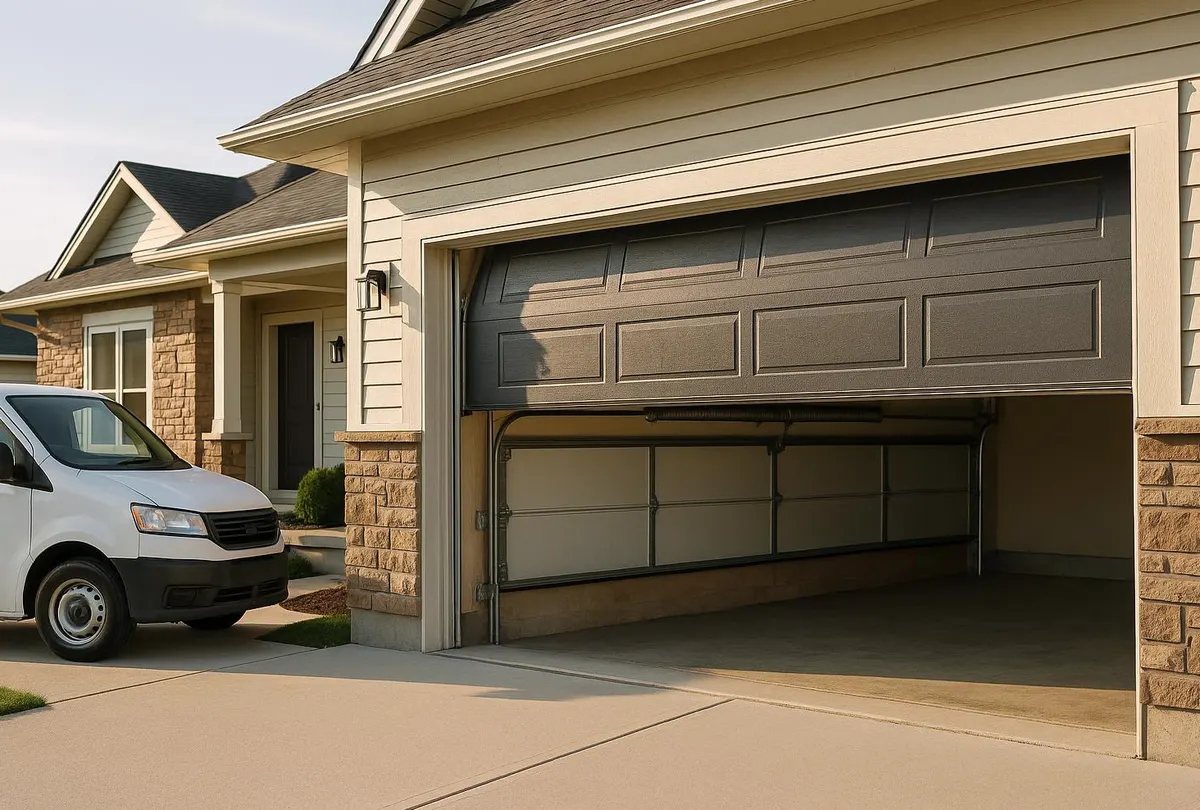
A garage door that looks fine can still fail in high wind because the problem is rarely the panels themselves. It's the track, the rollers, the hinges, and the connection points that hold the door in its frame. Before wind storm season settles in for the next several months, walk the door, tighten what's loose, and know how it's rated to handle pressure. That's the whole job in one sentence — the rest is how to actually do it.
Why the Garage Door Is a Home's Weakest Wall
Every other wall in a house is a solid, continuous structure. The garage door is a large opening covered by a panel that's only as strong as its track, rollers, and the number of attachment points holding it to the frame. When wind hits the front of a house, pressure builds. If that pressure finds a gap or a weak panel and pushes the door inward, the sudden pressure change inside the garage can stress the roof structure from underneath — the opposite of what most people picture when they think about wind damage.
This matters more here than in a lot of places because the Pacific Northwest doesn't get hurricanes, but it does get sustained wind events paired with heavy rain, and saturated ground plus wind-loaded trees means power lines and branches come down right alongside the kind of gusts that test a garage door's hardware. A door that's marginal in August can become a real liability in a November or December windstorm.
Signs Your Door Is Already Vulnerable
- Visible daylight around the edges of a closed door, especially at the top corners
- Loose or bent track brackets, which let the door rack side to side under pressure
- Rollers that wobble or make a grinding sound as the door moves
- Soft or swollen wood on older wood-panel doors, a common issue here after a few wet seasons without maintenance
- A door that shudders or flexes visibly in moderate wind, not just during a storm
Any one of these on its own might just mean the door needs a tune-up. Several together are a sign the door won't hold up well when wind actually leans on it.
Steps to Prepare Before the Season's First Big Storm
1. Inspect and Tighten the Track System
Loose lag screws and bent brackets are the most common reason a door comes off its track under wind pressure. Check every bracket along both vertical tracks and snug anything that's loosened with seasonal temperature swings and moisture.
2. Check Rollers and Hinges
Worn rollers let the door shift more than it should inside the track, giving wind room to work the door loose. Replacing worn rollers is inexpensive compared to what happens if the door comes off the track mid-storm.
3. Reinforce the Panels if the Door Is Older
Retrofit bracing kits exist specifically to stiffen panels against wind load on doors that weren't originally built to a wind rating. These are a reasonable middle option if full replacement isn't in the budget this year but the door sees a lot of wind exposure.
4. Know Your Opener's Behavior During a Power Outage
Wind storms here regularly take out power for hours at a time. Know where the manual release cord is and test it before you need it in the dark. If backup power matters to your household — medical equipment, a car that has to get out regardless of the outage — a battery backup opener is worth the investment before storm season, not during it.
5. Weatherproof the Bottom Seal and Edges
Wind-driven rain finds any gap, and a worn bottom seal lets water in under pressure that it wouldn't under calm conditions. New weatherstripping is a small job that prevents water damage to stored items and keeps wind from catching the door's edge.
6. Consider the Door's Wind Rating if You're Due for Replacement
If the current door is original to an older house and due for replacement anyway, ask about wind-load rated options. These are built with heavier gauge steel, reinforced struts, and stronger track hardware as standard, not an add-on.
During and After the Storm
- Keep the door closed during high wind warnings — an open door catches wind like a sail and transfers that force directly into the roof structure above it
- Avoid parking directly in front of the door during a storm in case hardware fails under pressure
- After the storm passes, check for new gaps, bent track, or a door that no longer sits flush — these are easy to miss until the next time the door is used
When to Call Portland Garage Door
If your inspection turns up a bent track, a door that's shifted in its frame, or hardware that's clearly past its working life, that's not a DIY fix — a door under spring tension that's also structurally compromised is dangerous to work on. Portland Garage Door handles garage door repair for exactly this kind of pre-storm issue, and if the inspection shows the door itself is the problem rather than just the hardware, our garage door installation team can talk through wind-rated options that make sense for the exposure your house actually gets.
If you're in Portland, Gresham, Beaverton, Milwaukie, Lake Oswego, Tigard, Troutdale, or Wood Village and want your door checked before the next windstorm rolls through, call Portland Garage Door and get it looked at now, while there's still calm weather to work in.