
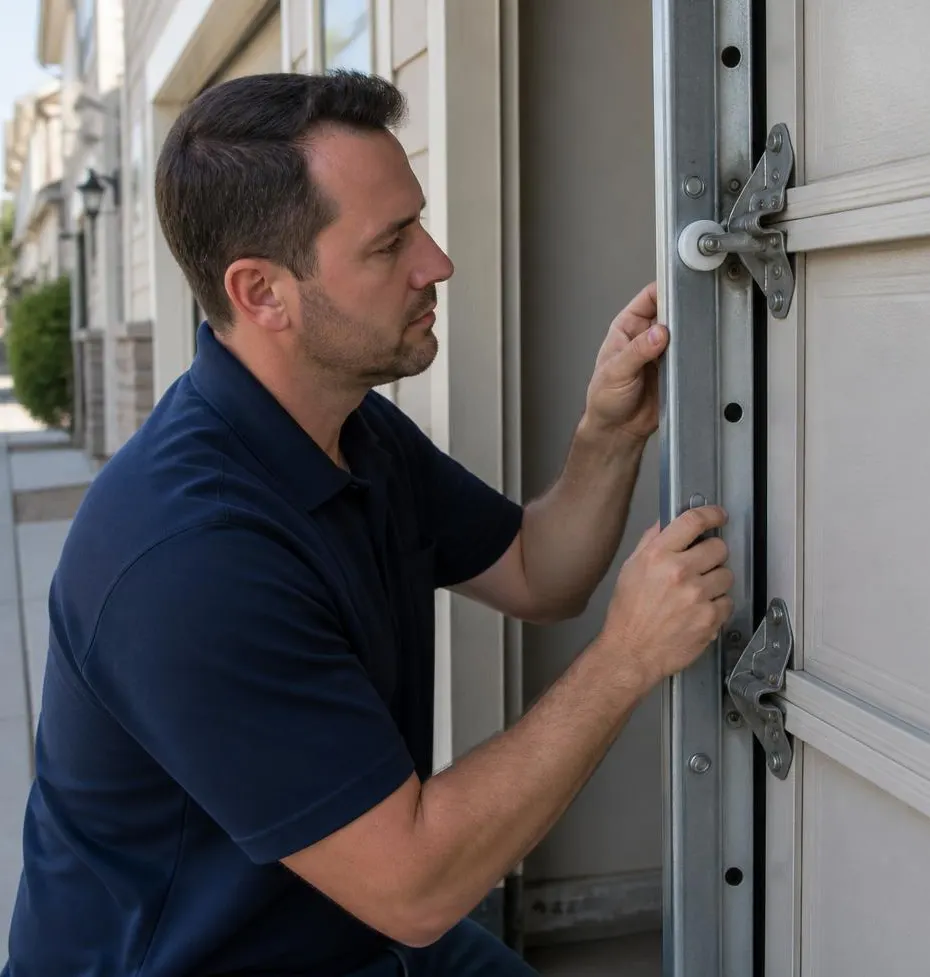
What Another Season of Neglect Actually Costs You
Skip garage door prep this fall and the bill usually doesn't show up until January, in the middle of an ice storm, when the opener won't budge and the door is frozen half-open to the weather. A rusted spring that was already weakening in September can snap outright once cold, damp air sets in. Wood trim that's been quietly absorbing moisture for months can swell enough to bind the door in its tracks, or rot through at the corners where water collects. None of this is dramatic until it is, and by then you're paying for an emergency repair instead of twenty minutes of maintenance.
Portland doesn't get brutal winters, but it gets something arguably harder on a garage door: weeks of sustained damp, wind-driven rain that finds every gap in the weatherstripping, and the occasional ice or windstorm that puts real stress on hardware that hasn't been checked since spring. The goal this time of year isn't to winterize for snow. It's to keep moisture out and keep moving parts moving.
How Rain and Damp Actually Damage a Garage Door
Moisture doesn't just sit on the surface. It works into places you don't look at often:
- Hardware rust: Hinges, rollers, and spring coils left unlubricated will start to rust after a few wet months, which adds friction and strain on the opener motor.
- Wood rot and swelling: If your door or trim has wood components, damp weather causes swelling that can throw off the fit in the tracks, and over a few seasons untreated wood starts to rot at the base where water pools.
- Moss growth: Shaded garage exteriors in this climate grow moss on wood panels and trim almost as readily as a roof does. Left alone, moss holds moisture against the surface and speeds up rot.
- Weatherstripping failure: The rubber seal along the bottom and sides is what keeps rain from blowing in under the door. Once it cracks or compresses flat, water gets into the garage floor and, in some layouts, toward the opener's electrical components.
The Fall Checklist: What to Do Before the Rain Really Sets In
1. Inspect and Replace Weatherstripping
Walk the full perimeter of the door and press on the rubber seal. If it's cracked, flattened, or pulling away from the track, replace it now rather than after the first big storm. A worn seal is cheap compared to water damage on the garage floor or stored belongings.
2. Check Wood Trim and Panels for Rot or Moss
Look closely at the bottom corners of wood panels and any trim around the door frame. Soft, spongy wood or dark staining means rot has already started. Moss can usually be brushed off and the area treated, but if the wood underneath is compromised, patching it now is far cheaper than replacing a panel next year.
3. Lubricate Hinges, Rollers, and Springs
A silicone-based garage door lubricant (not household oil, which attracts grit) on the hinges, rollers, and spring coils will reduce rust buildup and noise, and it takes real strain off the opener motor during the wetter, heavier months.
4. Test the Balance
Disconnect the opener and lift the door halfway by hand. It should stay in place on its own. If it drifts up or falls, the springs are compensating poorly for the door's weight, which is a sign they're wearing out, not something to ignore until they fail completely.
5. Check the Auto-Reverse Safety Sensors
Dust and condensation build up on the photo-eye sensors near the floor on each side of the door. Wipe them down and test that the door reverses properly when something breaks the beam. This matters more in winter when kids and pets are indoors more and moving through the garage in low light.
6. Confirm Battery Backup on the Opener
Wind storms in this region knock out power often enough that a battery backup on the opener is worth having and worth testing. If you don't have one, this is a reasonable time to add it, since a dead opener during a storm means manually releasing the door and lifting it by hand in the rain.
7. Clear Debris From Tracks
Leaves, moss fragments, and grit collect in the tracks this time of year. A dry brush and a quick wipe-down keeps the rollers moving smoothly and prevents grinding noises that get worse with added moisture.
When It's Time to Call Portland Garage Door
Some of this is genuinely DIY: lubrication, clearing debris, wiping sensors. But a few symptoms mean it's time to call in a technician rather than keep testing the problem yourself. If the door doesn't stay balanced when lifted by hand, if you hear grinding or popping from the spring area, or if the opener struggles and reverses direction with no obstruction, stop and call.
Our Garage Door Maintenance service covers a full inspection of springs, hardware, tracks, and weatherstripping before the wet season fully sets in, catching the small issues before they become an emergency call during a storm. If a spring is already showing wear, our Spring Replacement service handles that safely, since a failed spring under tension is not something to troubleshoot on your own.
If you're in Portland, Gresham, Beaverton, Milwaukie, Lake Oswego, Tigard, Troutdale, or Wood Village and want your garage door checked before the next windstorm rolls through, call Portland Garage Door today and get it handled before winter does it for you.